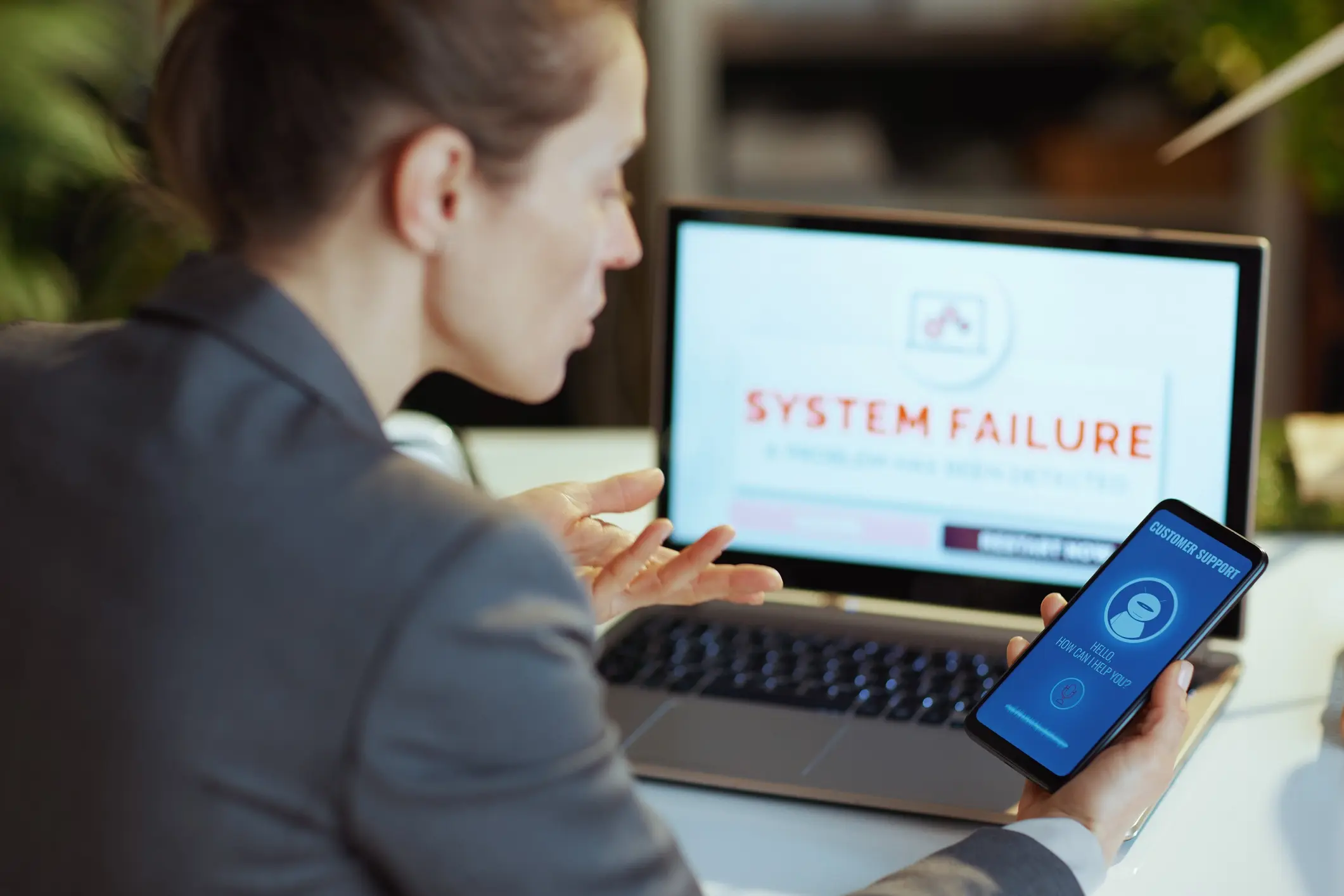

You have a problem, and the chatbot can't resolve it. None of the menu options fit, so you explain it a different way and end up right back where you started.
"I just want to speak to a human."
At that point, the technology has failed, but the real frustration is that the organisation doesn’t seem to value you enough to let you try another route. What began as a service issue starts to feel like a question about the relationship: does resolving my problem matter to you?

Asking for a person is a trust moment
When a customer asks for a person, their need has often changed. They’re looking for reassurance and someone to take responsibility for the problem, and another automated answer can’t do that.
Customers are clear about this. Gartner's survey of 3,566 B2B and B2C customers, conducted in February and March 2026, found that 87% considered access to a human essential when companies use generative AI for service. In the same survey, only 27% said they would be willing to try a chatbot again after a negative experience.
That second number should worry anyone building service automation. A bot that handles a problem badly makes customers less willing to trust the automation, and the organisation behind it.
What automation can miss
Operational scale and customer confidence are different outcomes. Air India reports that its AI.g assistant has handled over 26 million queries since launch with a 97% containment rate. Those are impressive operational numbers, but they say nothing about whether customers came away feeling more confident.
Consider a disrupted journey. Knowing the replacement flight time answers the functional question. Knowing that someone has understood what it means for your onward plans gives you something else: confidence that the situation is being handled.
That distinction matters commercially. If a failed interaction makes customers avoid automation next time, today's apparent saving can become tomorrow's additional service demand.
Cost discipline matters, but the point is to recognise where human time creates value that a shorter interaction or a lower contact rate can’t capture.
Seen this way, human service earns its cost in the moments where trust is most exposed.
Remove effort without removing choice
The best service organisations know when technology should lead and when a person should, and move between the two without the customer feeling it. Where that line sits depends on context more than on a fixed list of tasks. The same request can need different help depending on what has already happened and what’s at stake.
That balance can shift within a single interaction. When a customer has tried several times without success, or is clearly getting frustrated, carrying on with automation creates more effort than it removes. Some situations, such as a high-risk decision, call for human judgement before anything has gone wrong at all.
Customers should be able to change course. They shouldn’t have to exhaust every automated option before a request for a person is taken seriously, or sound distressed before anyone listens.
When they do move from AI to a person, the conversation should move with them. Technology should carry the context and history across, so the person can put their energy into resolving the problem. To the customer, it should feel like one service, not two systems the customer has to join together. That is High Tech, High Human in practice.

High-tech should create higher-value human work
None of this works if the person at the end of the escalation can only repeat the bot’s answer. They need the expertise and the authority to make a difference, and the capacity automation frees up is the chance to build both.
IKEA saw this early. In June 2023, Ingka Group reported reskilling 8,500 call-centre colleagues in capabilities including remote interior design, digital sales and complex problem-solving as its chatbot Billie handled simpler enquiries.
Gartner’s survey of 321 service and support leaders worldwide, carried out in September and October 2025, found that 85% are adding new tasks and responsibilities to frontline roles.
Automation earns its place when it gives people more time for the interactions where being human makes the greatest difference.